Garage Conversions in Torrance, CA
Torrance has a deep stock of postwar homes with attached garages — the kind that convert cleanly into bedrooms, offices and ADUs.
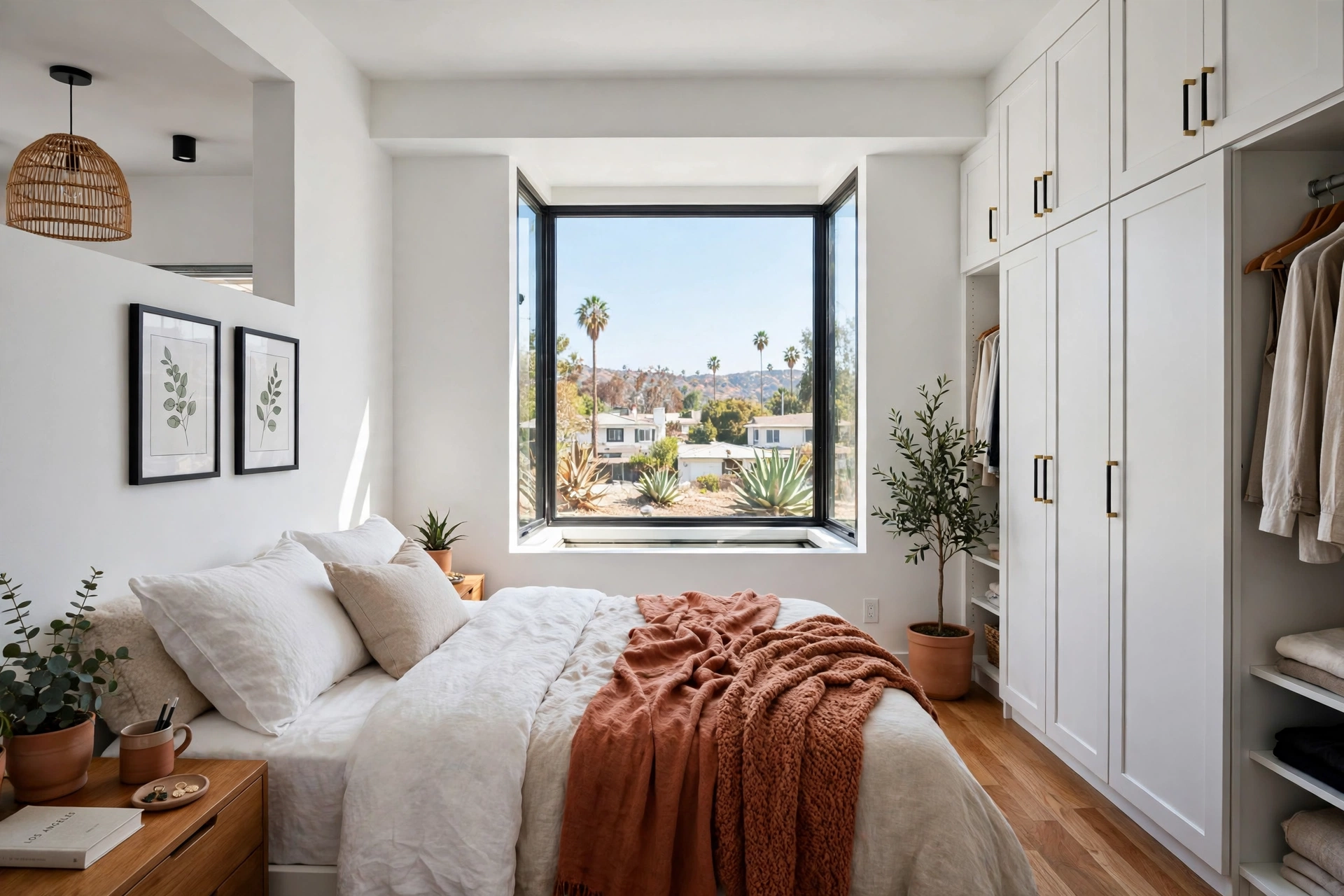 Garage conversion in Torrance, CA
Torrance is a South Bay city built largely after the war, and its housing stock shows it: ranch and tract homes on generous lots, most of them with attached garages. That makes Torrance one of the most straightforward cities in the region for a garage conversion. An attached garage shares a wall, a roofline and a utility path with the house, so the conversion is usually simpler and cheaper than converting a detached structure — shorter plumbing runs, shorter electrical runs, and a result that feels like part of the home.
The city permits through its own Community Development department, Building & Safety, not LADBS, and it processes ADUs as a matter of routine. Torrance's neighborhoods each have their own character: West Torrance and Southwood have larger lots and bigger garages, Hollywood Riviera has tighter, hillier lots with views, and Old Torrance has the city's oldest homes and garages. The conversion that makes sense in one neighborhood may not be the one that makes sense in another, and the site visit is what sorts that out.
Most Torrance conversions are for family use — a bedroom, a home office, a family room — or for a rental ADU. The attached-garage stock means the ADU-versus-JADU question comes up often: a full ADU with its own kitchen and bath, or a junior ADU that shares a bathroom with the main house. Both are permitted, both have their place, and the right choice depends on the size of the garage, the household and the budget.
Your city's rules
Who permits your conversion
City of Torrance Community Development / Building & Safety. Torrance permits garage conversions through its own Community Development department, Building & Safety — not LADBS. The permit set covers the site plan, floor plan, structural details, electrical and plumbing plans, and Title 24 energy calculations, and the city reviews it in plan check before issuing the building permit. The licensed local contractors we connect you with prepare the permit set for Torrance's reviewers and handle corrections.
- Torrance's postwar housing stock means attached garages are the norm, not the exception
- An attached garage can become an ADU or a JADU — the choice changes the plumbing and the permit
- West Torrance and Southwood have larger lots; Hollywood Riviera lots are tighter and hillier
- Old Torrance has some of the city's oldest garages, with slabs and panels that need checking
- The South Bay location means rental demand from nearby beach cities
- Torrance has its own building department, so Los Angeles rules do not apply
What it costs in Torrance
Garage conversions in Los Angeles run from $80,000 for a small garage to $300,000+ for a larger one. In Torrance, the number lands where your garage lands — size, scope and condition.
- Living space: $80,000–$150,000
- Bedroom: $90,000–$160,000
- Full ADU: $180,000–$300,000+
Torrance at a glance
Torrance sits in the South Bay, between the beach cities and the Palos Verdes Peninsula, and its postwar growth left it with a housing stock that is unusually well suited to garage conversions. The ranch and tract homes of West Torrance and Southwood have attached two-car garages on level lots, with panels and plumbing close at hand. Hollywood Riviera, on the hills above the coast, has smaller lots and more varied garages, some of them tucked under the house. Old Torrance, around the historic downtown, has the oldest garages in the city.
The city's own building department is the other half of the picture. Torrance is an incorporated city with its own Community Development department, so the permit path is Torrance's, not Los Angeles'. The reviewers know the city's housing stock, the plan check is predictable, and ADUs are a routine part of the workload.
Attached vs. detached: what Torrance lots usually have
Most Torrance garages are attached, and that shapes the conversion. An attached garage shares a wall with the house, which makes running water, sewer and electrical much simpler — the runs are short, the trench is small or nonexistent, and the new room ties into the house's systems directly. The result feels like part of the home, which is why attached garages convert so well into bedrooms, family rooms and offices. The trade-off is independence: an attached conversion is harder to make into a fully separate rental, because the entrance, the sound separation and the metering are all shared with the house.
Detached garages exist in Torrance too, especially on the larger lots of West Torrance and Southwood, and they convert the other way: naturally into ADUs. A detached garage already stands alone, so it gets its own entrance and its own identity as a separate unit, and a tenant gets real privacy. The cost is the utility trench — water and sewer have to travel from the house to a building that was never plumbed — and the electrical service has to reach the structure. The choice between attached and detached is usually made by the lot, not by preference, and the design follows from it.
Permits: City of Torrance Community Development
Torrance permits garage conversions through its Community Development department, Building & Safety. The permit set includes the site plan, floor plan, structural details, electrical and plumbing plans, and Title 24 energy calculations, and the city reviews it in plan check before issuing the building permit. State ADU law applies here: ADU permits are ministerial, the state sets a 60-day window for the city to act on a complete ADU application, a converted garage keeps its existing setbacks, and no replacement parking is required when a garage is converted.
The practical difference in Torrance is that the reviewers know the housing stock. A postwar attached garage with a standard slab and a modern panel is a familiar project, and the plan check tends to move quickly. Older garages in Old Torrance, or garages on the hillier lots of Hollywood Riviera, get more questions — the slab, the foundation and the drainage are checked more carefully. Either way, the permit set should be prepared for Torrance's reviewers specifically, not copied from a Los Angeles project.
What it costs in Torrance
Garage conversions in Torrance start from $80,000 for a small garage and run to $300,000+ for larger, fully fitted units. The attached-garage stock keeps many Torrance projects toward the lower end of the range, because the plumbing and electrical runs are short and there is no utility trench to dig. The items that push a Torrance project up are the usual ones: a slab that needs leveling or a moisture barrier, a panel that needs upgrading, and a full kitchen and bath for an ADU.
As planning estimates: a living space or family room typically runs $80,000–$150,000, a bedroom $90,000–$160,000, and a bedroom with a bathroom $120,000–$220,000. An office or studio usually lands at $80,000–$140,000. A full ADU with a kitchen and bath typically runs $180,000–$300,000+, and a rental unit built from a two-car garage usually lands at $200,000–$300,000+. These are estimates, not quotes — the final price depends on the garage's condition, whether it is attached or detached, and the finishes, and your contractor will price it from the actual site.
| Conversion type | Typical estimate |
|---|---|
| Living space / family room | $80,000 – $150,000 |
| Bedroom | $90,000 – $160,000 |
| Bedroom + bathroom | $120,000 – $220,000 |
| Office / studio | $80,000 – $140,000 |
| Full ADU (kitchen + bath) | $180,000 – $300,000+ |
| Rental unit / 2-car ADU | $200,000 – $300,000+ |
Estimates for Torrance garage conversions. Attached garages often sit toward the lower end of the bands.
ADU or JADU — which fits?
The ADU-versus-JADU question comes up in Torrance more than in most cities, because the attached-garage stock makes both options practical. A full ADU is a self-contained unit with its own entrance, kitchen and bathroom. It can be rented out, it counts as a separate dwelling, and it needs the most work: plumbing, a kitchen, a sewer tie-in and usually a panel upgrade. It is the right choice when the goal is rental income or a fully independent home for a family member.
A junior ADU, or JADU, is a unit of 500 square feet or less that shares a bathroom with the main house and requires the owner to live on the property. It is cheaper and simpler than a full ADU because it reuses the existing bathroom and needs less new plumbing, and in an attached garage it can be created with minimal changes to the structure. The two options are not interchangeable, and the choice should be made before the design starts.
Timeline
A Torrance garage conversion usually takes several months from the first site visit to the final inspection. The design and permit phase comes first: measuring the garage, checking the slab and the panel, drawing the plans and getting through the city's plan check. The state gives the city 60 days to act on a complete ADU application, but the design work and any corrections before submittal add time on top of that. Attached garages tend to move faster in design because the utility routes are short and obvious.
The build itself is shorter than the permit phase for most conversions. A living-space or bedroom conversion can be built in a matter of weeks once the permit is in hand, while a full ADU with a kitchen, a bathroom and a sewer tie-in takes longer. Inspections are scheduled as the work progresses, and the final inspection closes the project.
Permits in Torrance, step by step
Your conversion is permitted through City of Torrance Community Development / Building & Safety — the sequence is the same, the office is local.
Feasibility check
We look at your garage — slab, ceiling height, setbacks, electrical panel — and confirm what it can become under your city's rules.
Design & floor plan
A layout drawn for the way you will live in it: kitchen and bath for an ADU, egress and closet for a bedroom, light and data for an office.
Permit set & plan check
Site plan, floor plan, structural details and Title 24. Submitted to LADBS or your city's building department; corrections answered until approval.
Permit issued
Once the permit is in hand, the build can start. Under state law, a standard ADU permit gets a ministerial decision within 60 days.
Build
Framing, insulation, electrical, plumbing, drywall and finishes — in that order, with the work sequenced so inspections never stall the job.
Inspections
Rough inspections first (framing, electrical, plumbing), then final. Every inspection passed before the next trade covers it up.
Final sign-off
The inspector signs the final card and the space is cleared for occupancy — a legal room, a legal ADU, or a legal rental.
Tell us about your Torrance garage
A few details is all it takes — size, what you want the space to become, and anything you already know. We reply within one business day with next steps and a free estimate.
The permit page explains the full process, and the cost guide breaks down every price factor.
Request a Free Estimate
Tell us about your garage — we reply within one business day.