Turn Your Garage Into a Rental Unit
A legal rental that pays you every month, built from the garage you already own. We connect you with licensed local contractors who build it permitted and rentable.
 Turn Your Garage
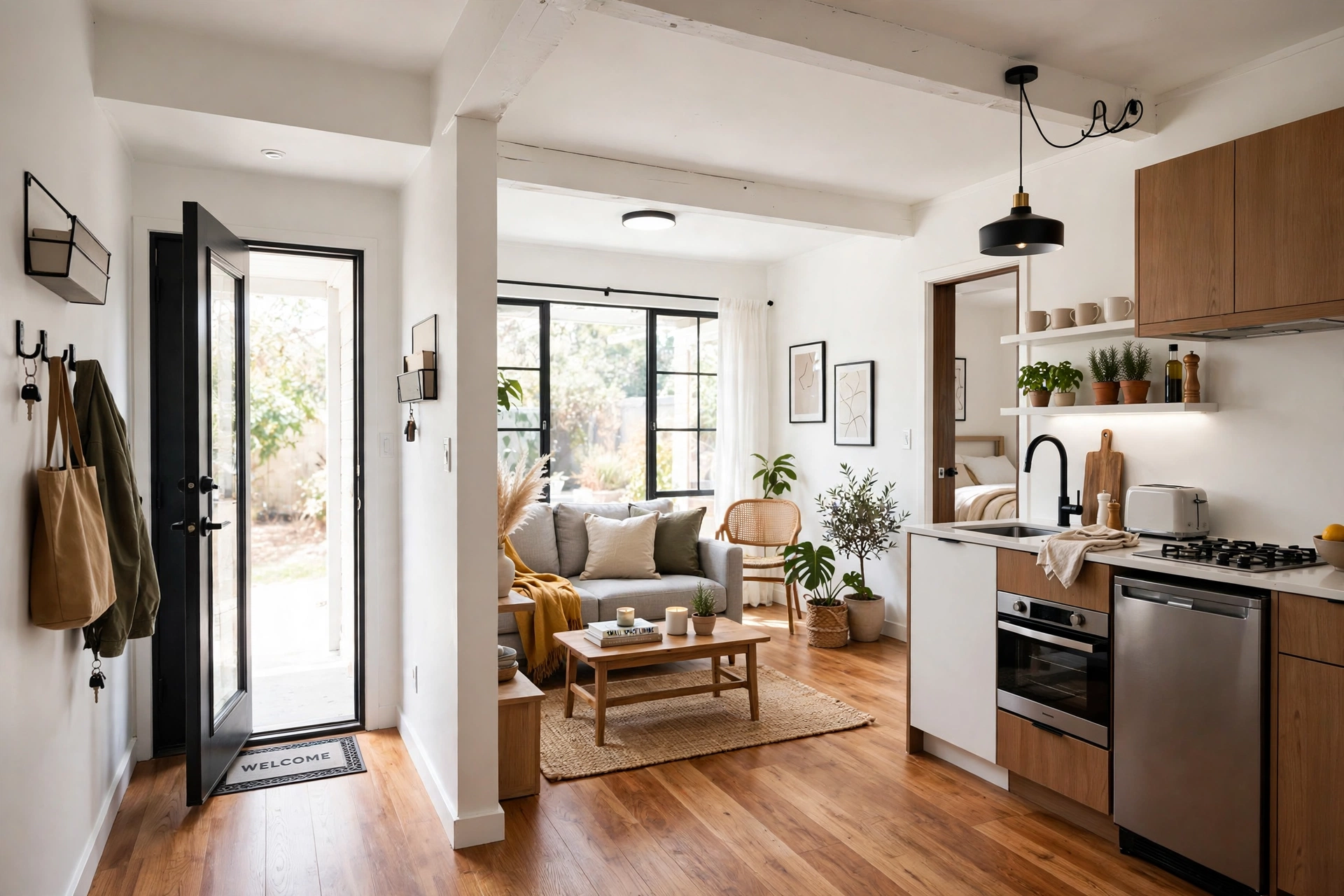
A garage rental unit is a garage conversion ADU with a clear job: earn rent. It is a complete small home with its own kitchen, bathroom, sleeping area and separate entrance, built inside your existing garage and rented to a tenant. For many Los Angeles homeowners it is the most valuable thing they can do with a garage, because it turns dead space into monthly income and adds a second home to the property.
The same build can serve different tenants. It can be a rental unit for a stranger, an in-law suite for a parent, a granny flat for a grandparent, or a studio for a young professional. The construction is the same in each case: a kitchen, a bathroom, a separate entrance and proper utilities. What changes is who lives there and how the rent or the family arrangement works.
We connect homeowners with licensed local contractors who build garage rental units across Los Angeles. This page explains what makes a garage rentable, how much rent it can bring in, what it costs to build, how permits work, the difference between a studio and a one-bedroom layout, and whether it adds value to the property.
Rental unit, in-law suite, or granny flat — same build, different tenant
A rental unit, an in-law suite and a granny flat are the same building project with different tenants. All three are complete small homes with a kitchen, a bathroom, a sleeping area and a separate entrance. The difference is who lives there: a paying tenant, a parent, or a grandparent. The construction, the permit and the inspections are the same either way.
That is good news for homeowners, because it means the unit is flexible. A granny flat built for a parent today can become a rental unit tomorrow, when the parent moves on or the family situation changes. A rental unit built for a tenant today can become an in-law suite later, when a parent needs to move closer. The build does not lock you into one use.
The choice that matters is the layout. A studio works well for a single tenant or a couple. A one-bedroom works better for a parent who wants a separate bedroom, or for a tenant who will stay for years. Your contractor will show you both layouts for your garage and help you choose the one that fits the tenant you have in mind, while keeping the other option open.
What makes a garage rentable? (kitchen, bath, entrance, meter)
Four things make a garage rentable. The first is a kitchen. A tenant needs a place to cook, with a sink, a stove, a refrigerator and counter space. A kitchenette with a hot plate is not enough for a long-term rental. The second is a bathroom, with a shower, a toilet and a sink, properly plumbed, ventilated and waterproofed.
The third is a separate entrance. A tenant needs to come and go without walking through your house. A side entrance or a front entrance with its own path gives the tenant privacy and gives you privacy too. The fourth is utilities: electricity, water and sewer that serve the unit properly, and ideally a separate meter or submeter so the tenant pays for what they use and you are not left guessing.
Beyond those four, the things that make a unit rent faster are the same things that make any home desirable: natural light, good insulation, heating and cooling, storage, and a small outdoor space like a patio or a landing. A unit that feels like a home rents faster and keeps tenants longer than a unit that feels like a converted garage.
- Kitchen: sink, stove, refrigerator and counter space
- Bathroom: shower, toilet and sink, properly ventilated
- Separate entrance: private access without walking through the main house
- Utilities: electrical service, water and sewer sized for the unit
- Separate meter or submeter: so the tenant pays for their own use
- Light and storage: windows, closet and a small outdoor area
How much rent can it bring in? (LA market context, labeled)
Rent is the reason most homeowners build a rental unit, so it is worth looking at the numbers honestly. As market context only, published rental figures for ADUs in parts of Los Angeles run from about $1,500 to $3,200 per month, depending on size, location and finish. A studio in the Valley may rent at the lower end of that range, while a one-bedroom in a strong rental neighborhood may rent at the higher end. These figures are market context from published sources, not a promise about your property.
Your actual rent will depend on your neighborhood, the size of the unit, the finish, the parking and the outdoor space. A unit near transit, jobs and shops rents for more than a unit in a quiet residential street far from amenities. A unit with a separate entrance, a patio and good light rents for more than a unit without them. Your contractor can give you a realistic sense of what similar units rent for in your area, but the only way to know for sure is to look at comparable rentals near you.
Rent is only part of the return. A permitted rental unit also adds value to the property, because a buyer is buying two homes instead of one. And it gives you flexibility: you can rent it, house family in it, or use it yourself as a guest house. That flexibility is worth something even before the first rent check arrives.
What it costs to build (ranges by size)
A garage-to-rental-unit conversion is an estimated $200,000 to $300,000 or more for a two-car garage ADU, and a full ADU with a kitchen and bathroom is an estimated $180,000 to $300,000 or more. Small garages start from $80,000 for simpler conversions, while larger garages with a full kitchen, a full bathroom and upgraded finishes reach $300,000 and above. These are estimate bands for planning, not a quote.
Size is the biggest cost driver. A one-car garage studio needs less kitchen, less bathroom and less flooring than a two-car one-bedroom, so it costs less. Attached garages usually cost less than detached garages, because utilities are closer. The slab, the electrical panel and the sewer line are the hidden costs that move the number most, and they are only known after a site visit.
| Unit type | Typical size | Estimated investment |
|---|---|---|
| Studio rental unit | One-car garage, about 350-400 sq ft | $180,000 - $300,000+ |
| One-bedroom rental unit | Two-car garage, about 450-500 sq ft | $200,000 - $300,000+ |
| Living space comparison | No kitchen or bath, family use only | $80,000 - $150,000 |
Estimate bands for planning. Small garages start from $80,000; larger rental units reach $300,000+.
Permits: it converts as an ADU (link to ADU page)
A garage rental unit is permitted as an ADU. That means the same permit path as a garage-to-ADU conversion: design, permit set, plan check through LADBS in the City of Los Angeles or through your own city's building department elsewhere, inspections, and a final sign-off that makes the unit legal to occupy and rent.
The ADU permit path is the reason a rental unit is worth building properly. A permitted unit can be rented legally, shown to a buyer, and counted by an appraiser. An unpermitted unit cannot be rented legally in most cases, and it can cause problems with insurance and with a sale. The permit is what turns a garage remodel into a rental home.
The details of the ADU permit process, including the 60-day rule, the LADBS Standard Plan Program and the inspection sequence, are explained on our garage-to-ADU page. Your contractor will confirm the exact permit path for your address and handle the submission and the inspections for you.
Studio vs. one-bedroom layouts
A studio layout is open plan. The living area, the kitchen and the sleeping area share one room, with a partial wall or a wardrobe separating the sleeping area. A studio works well in a one-car garage, it costs less to build, and it rents well to a single tenant or a couple who want an affordable home in a good neighborhood.
A one-bedroom layout has a separate bedroom with a door, a closet and a window. The living area and kitchen share the rest of the space, and the bathroom sits between the two rooms. A one-bedroom needs a two-car garage or a deep single garage, it costs more to build, and it rents for more, because it suits a tenant who will stay for years or a parent who wants a real bedroom.
The choice depends on your garage and your tenant. If your garage is small, a studio is the better layout, because a cramped one-bedroom is worse than a generous studio. If your garage is large, a one-bedroom gives you more rent and more flexibility. Your contractor will draw both layouts for your garage and help you choose.
Does it add value to the property?
A permitted rental unit adds value to a property in two ways. First, it adds a second home to the lot, which buyers value because they can live in one home and rent the other, or house family in one and live in the other. Second, it adds rental income, which buyers and appraisers count when they value the property. A garage that earns rent is worth more than a garage that holds a car.
The value added depends on the quality of the build and the permit. A well-built, permitted unit with good light, good insulation and a proper kitchen adds the most value. A cheap build with poor finishes and no permit adds little, and it can even reduce value if a buyer sees it as a problem to fix. Spend the money where tenants and buyers notice it, and the value follows.
The value question also depends on your neighborhood. In areas with strong rental demand, a rental unit adds more value than in areas where rentals are hard to fill. Your contractor can give you a sense of rental demand in your area, but the decision should also reflect how you will use the unit yourself, not just what it might sell for.
Your rental unit checklist
- Decide who will live there: tenant, parent or family member
- Choose studio or one-bedroom based on your garage size
- Confirm the kitchen, bathroom, entrance and meter plan
- Check rental demand and comparable rents in your neighborhood
- Get a written scope with a firm price from your licensed builder
- Confirm the ADU permit path and the final sign-off before renting
What it costs
Garage conversions in Los Angeles run from $80,000 for a small garage to $300,000+ for a larger one. The exact number depends on size, scope and condition — a site visit gives you a fixed price, not a ballpark.
- Living space / family room: $80,000–$150,000
- Bedroom: $90,000–$160,000
- Bedroom + bathroom: $120,000–$220,000
- Home office / studio: $80,000–$140,000
- Full ADU: $180,000–$300,000+
From garage to living space, step by step
The same permit path on every conversion — the city changes, the sequence does not.
Feasibility check
We look at your garage — slab, ceiling height, setbacks, electrical panel — and confirm what it can become under your city's rules.
Design & floor plan
A layout drawn for the way you will live in it: kitchen and bath for an ADU, egress and closet for a bedroom, light and data for an office.
Permit set & plan check
Site plan, floor plan, structural details and Title 24. Submitted to LADBS or your city's building department; corrections answered until approval.
Permit issued
Once the permit is in hand, the build can start. Under state law, a standard ADU permit gets a ministerial decision within 60 days.
Build
Framing, insulation, electrical, plumbing, drywall and finishes — in that order, with the work sequenced so inspections never stall the job.
Inspections
Rough inspections first (framing, electrical, plumbing), then final. Every inspection passed before the next trade covers it up.
Final sign-off
The inspector signs the final card and the space is cleared for occupancy — a legal room, a legal ADU, or a legal rental.
Tell us about your garage
A few details is all it takes — size, city, and what you want the space to become. We reply within one business day with next steps and a free estimate.
Prefer to read first? The cost guide breaks down every price factor, and the permit page walks through LADBS and your city's process.
Request a Free Estimate
Tell us about your garage — we reply within one business day.